


Solitaire Tripeaks : Blooming
Brainit Games
I spent time with Solitaire Tripeaks: Blooming as a light card game rather than treating it like a serious strategy title, and that distinction matters. Its appeal is the familiar Tripeaks format: clear a layout by selecting cards that sit one rank above or below the card in play, while trying to keep a useful run going. The result is easy to understand within moments, but it still gives me small decisions to make whenever several cards are available.
That makes it a good candidate for short breaks, quiet evenings, and anyone who wants a solo card game without learning a complicated ruleset. It is free to start, rated for Everyone, and developed by Brainit Games. The game has also built a 4.8 average from around 5.3 thousand ratings, with more than 100 thousand installs, so it has found an audience beyond a handful of early players.
My recommendation depends less on whether you enjoy solitaire in general and more on what you expect from it. If you want a relaxed Tripeaks loop with multiple levels and creative boosters, this is worth trying. If you want deep deck-building, competitive multiplayer, or a completely interruption-free experience, you should approach it with different expectations.
How I would decide whether it fits
The basic question: do you enjoy quick card decisions?
The central loop is approachable. You are not managing a hand of cards in the way you would in a traditional competitive card game. Instead, you work through a visible arrangement and look for a card that can follow the current one by rank. That creates a pleasant balance between planning and immediate recognition: I can see much of the board, but I still have to decide which available card is safest to remove first.
That structure is especially useful when I only have a few minutes. I do not need to remember a long story, coordinate with another player, or build a complicated strategy before starting. The game gives me a compact mental task, and the familiar solitaire foundation makes it easy to return to after a break.
Related News






At the same time, Tripeaks is not entirely passive. A careless choice can remove a card that would have helped extend a later sequence. The most useful habit is to pause before tapping the obvious move and check whether another exposed card opens a more valuable part of the layout. That small pause makes the game feel more deliberate than simply clearing cards in any available order.
What should matter before installing?
I would judge this game using four practical criteria: how comfortable the rules feel, whether the level structure keeps the routine fresh, how much help the boosters provide, and how well the experience suits your tolerance for optional spending. The store summary points to multiple levels, creative boosters, and an endless stream of play, but those phrases only become meaningful when considered as part of an everyday routine.
For a new player, the first criterion is the easiest. The short description identifies it simply as Solitaire Tripeaks, and that directness is helpful. You are not downloading a game that hides its core identity behind a large collection of unrelated systems. If you already know Tripeaks, you can begin making decisions immediately. If you only know classic solitaire, the transition is still fairly natural because the objective remains card clearing rather than competition against another person.
Gallery
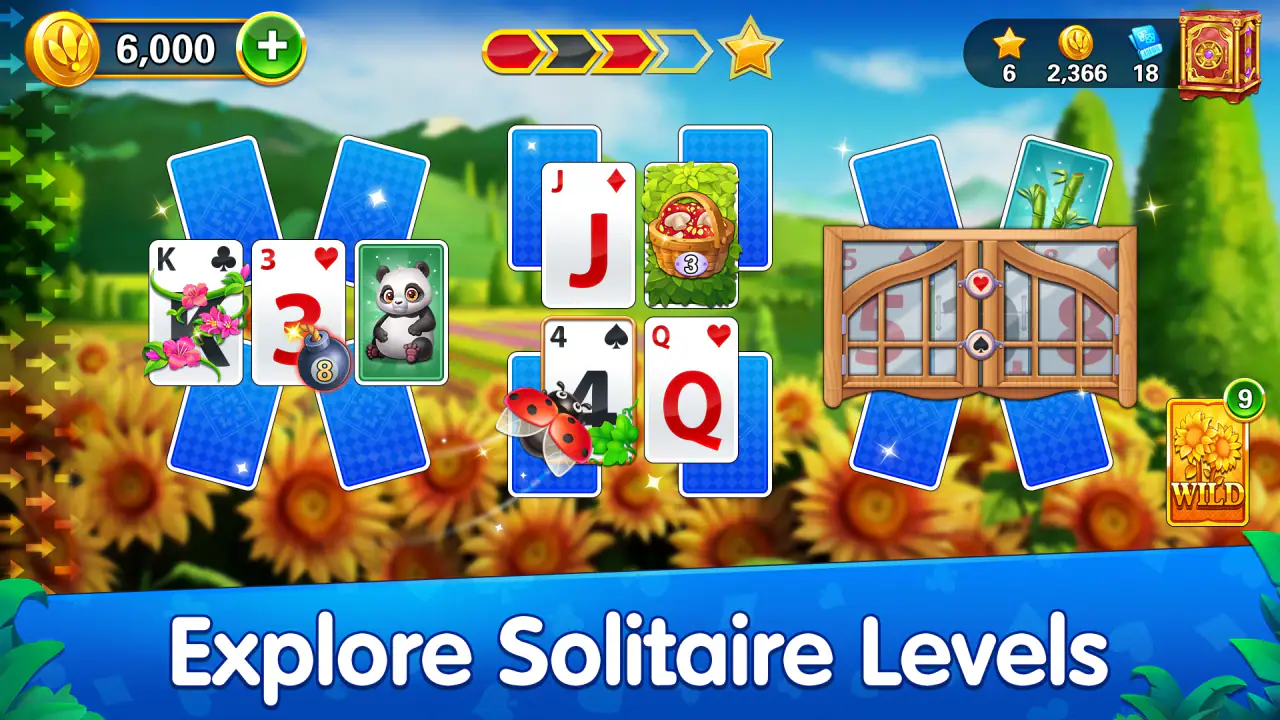
The second criterion is variety. A single layout repeated forever would become tiring, even if the basic rule remained enjoyable. Multiple levels give the game a reason to keep opening, particularly for players who like a sense of gradual progress. I found that the appeal comes from solving the next arrangement rather than from mastering one fixed puzzle. That is a useful difference from a basic solitaire app that feels more like a deck of randomly dealt rounds.
The third criterion is how you treat boosters. They can make a difficult board feel less punishing and may help players continue when a run has stalled. I see them as a convenience rather than the main reason to play. The most satisfying moments still come from spotting a good sequence myself. If you prefer every win to depend only on pure card luck and careful play, you may want to use assistance sparingly.
Finally, consider the business model before you become invested. The game is free, but it includes in-app purchases ranging from $0.99 to $99.99 per item. That does not automatically make the free experience unsuitable, but it means I would decide in advance whether boosters or other optional purchases belong in my routine. A simple personal rule—play without buying anything at first—lets you judge the core game fairly.
A realistic everyday use case
Imagine waiting for an appointment with ten minutes to spare. A long role-playing game would be awkward, and a multiplayer match might end at the wrong moment. This is where the compact card format makes sense. I can open a level, make a few moves, and stop without needing to remember a complicated plot or leave teammates waiting.
It also works as a wind-down activity because the decisions are active enough to hold attention without demanding constant intensity. I would not call it a meditation tool, since a difficult layout or a poor sequence can still create tension, but it is calmer than many action-oriented mobile games. The best use is a short, self-contained session in which I want something to do with my hands and eyes.
Where the game wins against familiar alternatives
It keeps the rules recognizable while adding a reason to continue
Compared with a plain solitaire experience, the Tripeaks format gives me a stronger sense of board reading. The visible peaks create a simple priority problem: should I clear the card that is easiest now, or choose a slightly less obvious move that exposes more of the layout? That decision is small, but it gives each deal a little shape.
Traditional Klondike-style solitaire often asks players to manage hidden information across several columns and build suits in a more structured way. That can be rewarding, but it also asks for more patience and a different kind of concentration. Here, the emphasis is on maintaining a sequence and opening the board. For a player who finds classic solitaire too methodical, this version can feel more immediate.
On the other hand, players who enjoy the careful suit-building logic of Klondike may find Tripeaks less intricate. There is no reason to pretend that one replaces the other. I see them as different moods: Klondike for a more deliberate puzzle, Tripeaks for faster visual choices and a lighter rhythm.
The level-based structure helps the game avoid feeling disposable
Many simple card games are enjoyable for a few rounds and then become background noise. The presence of multiple levels gives this one a clearer path through the content. I like having a reason to test myself against another arrangement rather than stopping after a single random deal.
The important insight is that progression changes how I play. In a one-off solitaire round, I might chase any available sequence because the result is isolated. When levels are part of the experience, I become more careful about learning from failed attempts. I start noticing whether I lost because I used an exposed card too early, ignored a better chain, or relied too heavily on a helpful item. That reflective loop adds value that is easy to miss in a short store description.
Boosters can be useful when treated as a limited resource
The creative boosters are one of the game’s more practical additions, particularly for players who dislike abandoning a board after building momentum. My advice is not to use them automatically. First, scan the remaining cards and decide whether the position is genuinely blocked or merely inconvenient. A booster has more value when it rescues a promising run than when it covers a move I could have found with another careful look.
This also creates a trade-off between comfort and challenge. Using assistance can keep the session moving, which is helpful when I am playing casually. Saving it for difficult situations preserves more of the puzzle element. Players who want a relaxed experience may appreciate the first approach, while players who enjoy testing their decisions should lean toward the second.
It is approachable for a broad household audience
The Everyone content rating makes the game easy to consider for a wide range of players. The rules are familiar enough for someone who has played card games casually, while the short sessions are suitable for people who do not want a demanding commitment. I would still explain the Tripeaks rule to a first-time player instead of assuming the name says everything, but the learning curve is gentle.
That accessibility is a real strength when compared with card games built around competitive jargon, complex collections, or fast reactions. You can hand the game to a relative who enjoys solitaire without asking them to study a tutorial for a long time. The limitation is that accessibility also means the game may not provide enough depth for someone looking for a serious card battler.
It has a modest technical entry point
The listed minimum operating system is Android 7.0, which makes the game available to many older Android devices. That matters if you are keeping an older phone for simple entertainment or installing the game on a spare device. I would still judge performance on the particular handset, because an operating-system requirement alone does not describe every device’s speed or screen quality.
The current version is 3.4, and the game was released on May 9, 2024. Those details are useful when deciding whether the app fits your device and expectations, but they do not tell me how much I will enjoy the loop. The more important point is that this is a relatively focused card game, not an enormous download category that requires a high-end gaming phone to make sense.
Where another kind of card game may fit better
Choose a different option if you need competition
This is a solo solitaire game, so I would not install it expecting live opponents, social ranking, or the pressure of a timed match. Players who enjoy reading another person’s strategy will get more from a traditional online card battler. That alternative category offers interaction that this game is not designed to provide.
The trade-off is reduced convenience. Competitive games often require a stable moment in which I can finish a match, while a solitaire round is easier to pause mentally and return to later. If your priority is social tension, choose the competitive route. If your priority is control over when and how long you play, the solo format is more comfortable.
Skip it if you want deep collection systems
Some card games are really collection games, with elaborate decks, character abilities, or long-term construction decisions. That is not the experience I would seek here. The attraction is the board in front of me and the next sequence of ranks, not building a personalized competitive loadout.
This difference is important because boosters should not be confused with deck-building depth. They may help with the immediate puzzle, but they do not turn the game into a collectible card strategy title. If your enjoyment comes from experimenting with dozens of card combinations, a dedicated deck-building game will be a better match.
Consider a simpler alternative if purchases would bother you
The free entry is convenient, but the presence of optional items priced from $0.99 to $99.99 means I would not describe the game as entirely free of monetization concerns. A player who is comfortable ignoring purchases can treat them as optional support or convenience. Someone who feels pressured whenever boosters are offered may prefer a paid card game with a clearer one-time model, if that alternative suits their device and budget.
My practical advice is to make the decision before a difficult level creates frustration. If you already know that you dislike spending to recover from a failed round, set a no-purchase boundary from the beginning. That keeps the game’s value tied to its free play rather than to the temptation to solve every obstacle immediately.
Do not choose it for a story or a large social world
The game’s identity is concentrated in solitaire play. I would not expect a narrative campaign, character relationships, or a persistent social environment from this format. That focus is a benefit when I want a clean card diversion, but it is a limitation for anyone who needs a changing world to stay engaged.
Likewise, the phrase “endless fun” should be understood as repeatable card play, not as unlimited novelty. The basic decision pattern remains the center of the experience. If you enjoy improving your choices within a familiar system, that repetition can be satisfying. If you need constant new mechanics, it may begin to feel predictable.
The real cost of changing from another solitaire app
Your existing habits matter more than the download price
Because the game is free, the biggest switching cost is not financial. It is the time needed to learn how its levels and boosters fit your preferred style. Someone moving from classic solitaire may need a few rounds to stop thinking only in terms of columns and suits. Someone coming from another Tripeaks game may adapt immediately but may also compare the pacing and assistance options closely.
I would switch when the current app has become too repetitive or when I want a more structured sequence of levels. I would stay with an existing alternative if it already gives me the exact balance I want and I dislike changing routines. A familiar interface has value, especially for a game I open casually rather than study.
Start with a controlled trial
The safest way to evaluate it is to play several short sessions without buying anything. Use the first session to learn the card relationship, the next to test whether the level progression motivates you, and another to see whether you enjoy solving difficult layouts without immediately reaching for a booster. This separates genuine interest in the game from the temporary novelty of a new installation.
During that trial, pay attention to one specific question: do you feel curious about the next board, or are you only continuing because the previous round was unfinished? Curiosity is a good sign. If the game feels like a repetitive obligation after a few sessions, a more complex solitaire variant or a competitive card title may suit you better.
How to get more from each board
I found that the best improvement is to treat the visible layout as a sequence of opportunities rather than a list of immediate taps. Before playing, identify cards that uncover large sections of the board. When two moves are both legal, prefer the one that preserves more future options unless the other begins a particularly long run.
Another useful habit is to separate recovery from progress. If a booster can save a board, ask whether it will reveal genuinely useful cards or merely delay the same problem. This prevents assistance from becoming an automatic reflex. It also makes successful rounds feel more earned, even when a helpful item plays a role.
Finally, stop a session when your attention drops. Tripeaks rewards noticing relationships between ranks, and rushed tapping makes those relationships easier to miss. A short break can be more valuable than forcing a board while distracted. That is one reason the game works well as a casual companion rather than as a marathon task.
My recommendation for the right player
I recommend Solitaire Tripeaks: Blooming to anyone who wants a free, approachable card game built around quick solo rounds, visible choices, and a progression of levels. The combination of familiar Tripeaks rules and optional boosters gives it more structure than a barebones solitaire app, while the Everyone rating and Android 7.0 minimum make it an easy candidate for a broad range of users.
I would especially suggest it to people who enjoy relaxing puzzle-like decisions but do not want a story, a competitive lobby, or a complicated card collection. It fits waiting rooms, short commutes when you are not driving, and evenings when you want something more engaging than scrolling but less demanding than a full game session.
I would be more cautious for players who dislike in-app purchases, need substantial strategic depth, or expect every round to feel dramatically different. The free price makes trying it low-risk, but the optional purchase range means you should decide your spending boundary early. If you want multiplayer competition or deck construction, another category will serve you better.
For me, the strongest reason to keep it installed is its balance between immediacy and small-scale planning. I can understand the board quickly, yet thoughtful card order still matters. The weakest point is the natural repetition of the format: once the basic rhythm becomes familiar, enjoyment depends on whether new levels and careful play are enough to hold your attention.
Overall, Brainit Games has made a focused solitaire experience rather than an all-purpose card platform. That focus is exactly why I would recommend giving it a try if Tripeaks is your kind of game. Start free, play without assuming you need boosters, and judge it by whether the next board feels like an inviting puzzle instead of another task. For the right player, that modest promise is enough to make this a dependable everyday card game.
FAQs for Solitaire Tripeaks : Blooming
What is Solitaire TriPeaks: Blooming?
Solitaire TriPeaks: Blooming is a casual card puzzle game based on the classic TriPeaks solitaire format. You clear cards from the board by selecting a card that is one rank higher or lower than the card in your hand. Alongside the solitaire rounds, the game adds a colorful blooming and garden-themed progression system, giving you extra goals beyond simply completing each level.
How do you play Solitaire TriPeaks: Blooming?
Each level presents a layout of face-up and face-down cards arranged in TriPeaks formations. Your objective is to remove as many cards as possible by matching cards that are immediately above or below the current card in rank. When no suitable move is available, you draw from the deck. Planning long chains, uncovering hidden cards, and using available boosters carefully are important for finishing more challenging levels.
Is Solitaire TriPeaks: Blooming free to download and play?
The game can generally be downloaded and played without an upfront purchase, but it may include optional in-app purchases. These purchases can provide extra coins, boosters, lives, or other helpful resources, depending on the current version and platform. You can usually progress without paying, although waiting for lives or replaying difficult levels may encourage optional spending.
Does Solitaire TriPeaks: Blooming require an internet connection?
Some parts of Solitaire TriPeaks: Blooming may work offline, particularly basic solitaire gameplay that has already been loaded on your device. However, an internet connection may be needed for advertisements, in-app purchases, cloud synchronization, events, updates, and certain reward features. If you plan to play while traveling, it is best to test the game offline first because functionality can vary between versions.
Is Solitaire TriPeaks: Blooming suitable for children and casual players?
Solitaire TriPeaks: Blooming is easy to understand and suitable for players who enjoy relaxed card puzzles, colorful visuals, and short game sessions. It does not usually require fast reflexes, making it accessible to many ages. Parents should still check the store listing and device settings because the game may contain advertising, optional purchases, and social or promotional features.
Pros
- Relaxing gameplay suitable for short or long sessions.
- Bright flower-themed visuals make the game pleasant to play.
- Simple controls are easy for beginners to understand.
- Frequent events add variety beyond the standard levels.
- Offline play is convenient when no internet connection is available.
Cons
- Some challenging deals may require boosters or repeated attempts.
- Energy or lives can limit uninterrupted play sessions.
- Ads may appear between levels or after certain actions.
- Progression can feel repetitive after playing many similar boards.
- In-app purchases may be tempting when resources run low.


